



Root Zone No. 1 · Strawberry
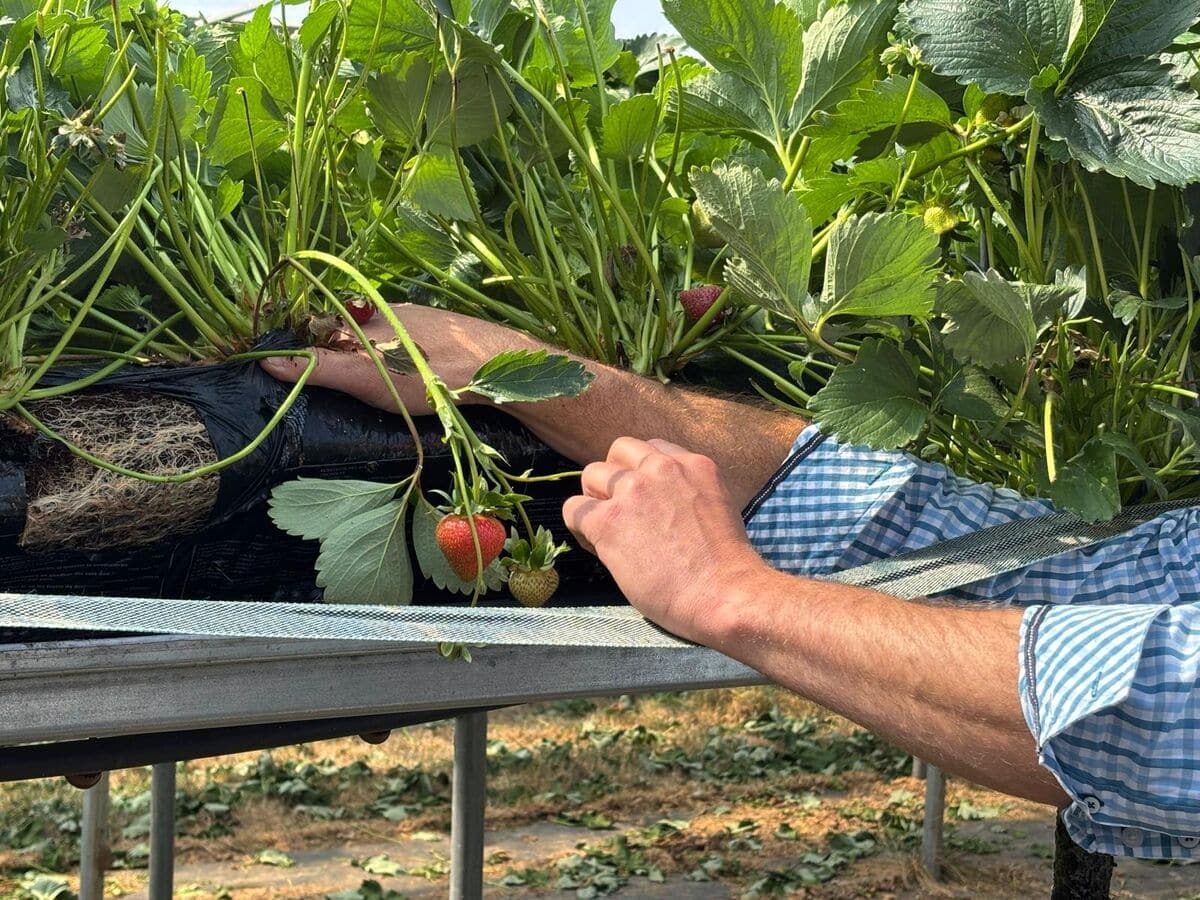
Replanting into last year’s bags saves a purchase and a delivery. But second-season coir is no longer the same substrate: it can carry last season’s diseases, pests and weeds, it has lost air and it holds more water. Here are the risks the trials measure, and how to limit them if you keep your bags.
What you are risking
- A plant health risk: you replant into last year’s diseases.A used bag keeps whatever last season left in it. NIAB points out that reusing coir is known to increase disease, pest and weed problems. In its trial, Phytophthora cactorum, the cause of crown rot, increased in composted coir. In Tasmania, pathogens were found in some reused bags. And a substrate that stays wet at the surface raises humidity under the canopy, and with it disease pressure throughout the season.
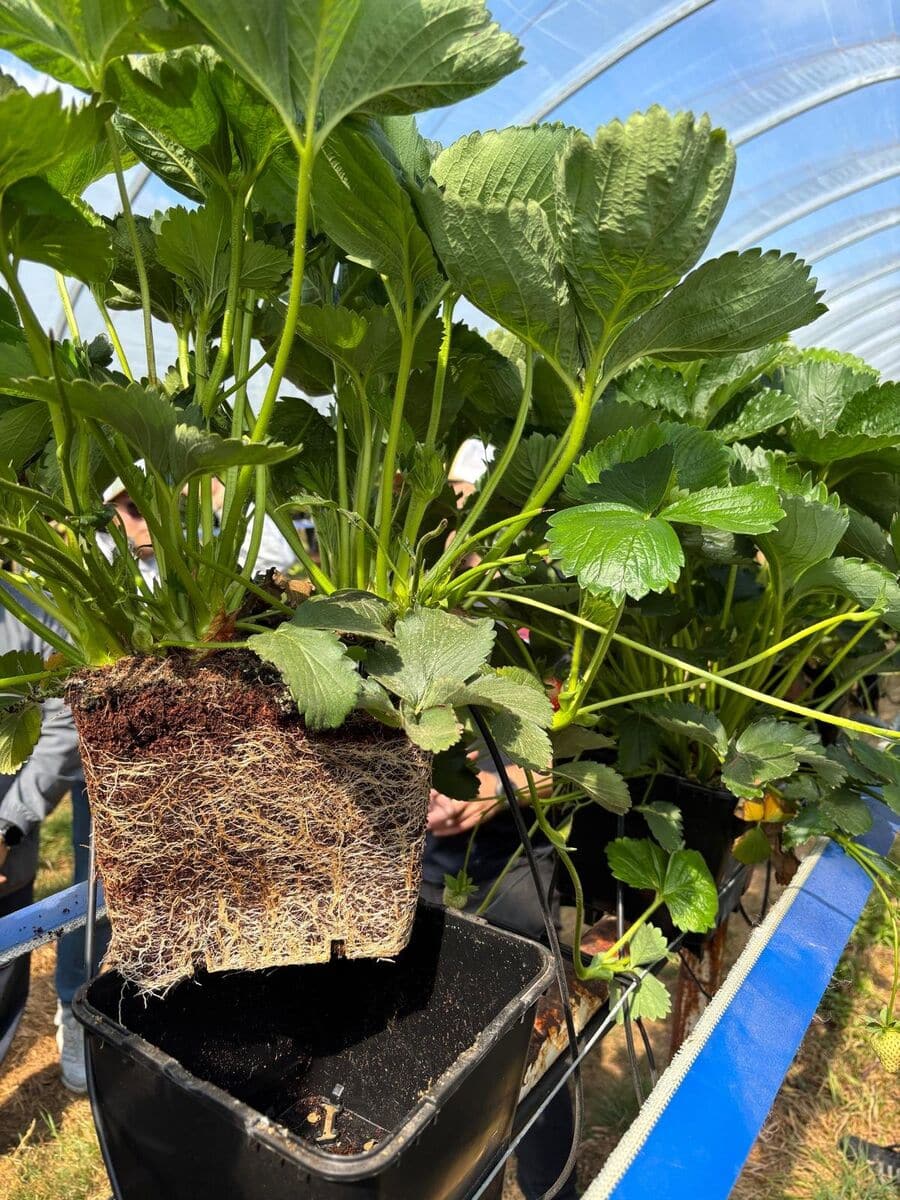
- Roots short of air at the bottom of the bag.In the NIAB trial, coir reused directly held less air than virgin coir and much more water, because it had lost part of its coarse particles (5 to 20 mm). Over the season, fine particles move down and clog the pores at the bottom of the bag: the base stays wet for longer, oxygen runs short, roots work less well and plants become harder to manage late in the season.
- A yield loss, especially on everbearers.Strawberry plants replanted directly into used coir yielded 10% less than in virgin coir. In an earlier project, June-bearers coped well with replanting, but everbearers replanted year after year suffered a significant yield loss.
- A chemical balance that has shifted.After one season, the pH, EC and potassium and calcium levels of the coir are no longer those of new coir, and the gap depends on the original mix. A fertigation recipe set for virgin coir may therefore no longer suit. The Tasmanian trials also found local build-ups of EC in corners and low points, hard to flush out, even without changing the recipe.
- Too much water, if you irrigate as you would new coir.In the NIAB trial, every coir received the volumes and solution planned for virgin coir, and NIAB considers that some plants may have received too much water and an unbalanced feed, which may have reduced yield.
Sources: NIAB, Fruit Annual Review 2023, “Developing methods to recycle coir substrate”, p. 26; Fruit Growers Tasmania / RMCG, “Coir reuse project findings” (2026)
coir reused directly
composted coir
recycled coir
Yield compared with virgin coir. NIAB trial, 2022-2023.
Keeping your bags also means keeping what is in them: last season’s pathogens, pests and weeds, in a substrate that has lost its air.
If you keep your bags, limit the risks
- Do not keep bags from a crop that had plant health problems.Crown rot, other root diseases, pests: if a block had them this season, its bags should not go round again. On the others, watch the plants closely from the restart.
- Open a few bags before replanting.Take them from different places in the tunnel or glasshouse and look at the lower third. If it is dense, dark and wet, the structure has gone, whatever the top looks like.
- Keep reuse for the crops that tolerate it.The trials show that shorter crops tolerate it better than everbearers replanted year after year.
- Adapt irrigation from day one.Used coir holds more water: reduce volumes compared with new coir, and monitor drainage and the EC of the drain water, especially in areas that are hard to flush.
- Keep a reference in new bags.A few rows in new bags next to the reused ones give you a real comparison on your own farm, without putting the season at stake.
Sources: NIAB, Fruit Annual Review 2023, p. 26; Fruit Growers Tasmania / RMCG (2026)
On the economics, the Tasmanian analysis still puts new coir in bags, for a single season, first on gross margin under current assumptions. Reuse becomes more attractive if the price of coir goes up. Recycling aims to keep the savings without the risk. In the NIAB trial, coir recycled with no new material added had no more Phytophthora cactorum than virgin coir, but it still lost 4% of yield. NIAB considers this gap significant.
Sources: Fruit Growers Tasmania / RMCG (2026); NIAB, Fruit Annual Review 2023, p. 26
Why Regrow exists
Over a strawberry season, 4% less yield is still a loss. Regrow was created to close that gap. The used substrate is sterilised, which deals with the plant health risk, then mixed with new coir, which brings back fresh structure where the trials show most of the yield is lost. Regrow is made and recycled in the United Kingdom, for soft fruit and vegetable growers.
New substrate or reuse for 2027?
Tell us about your growing system: gutter type, varieties, irrigation strategy. We will look at the options with you, based on your own farm.