



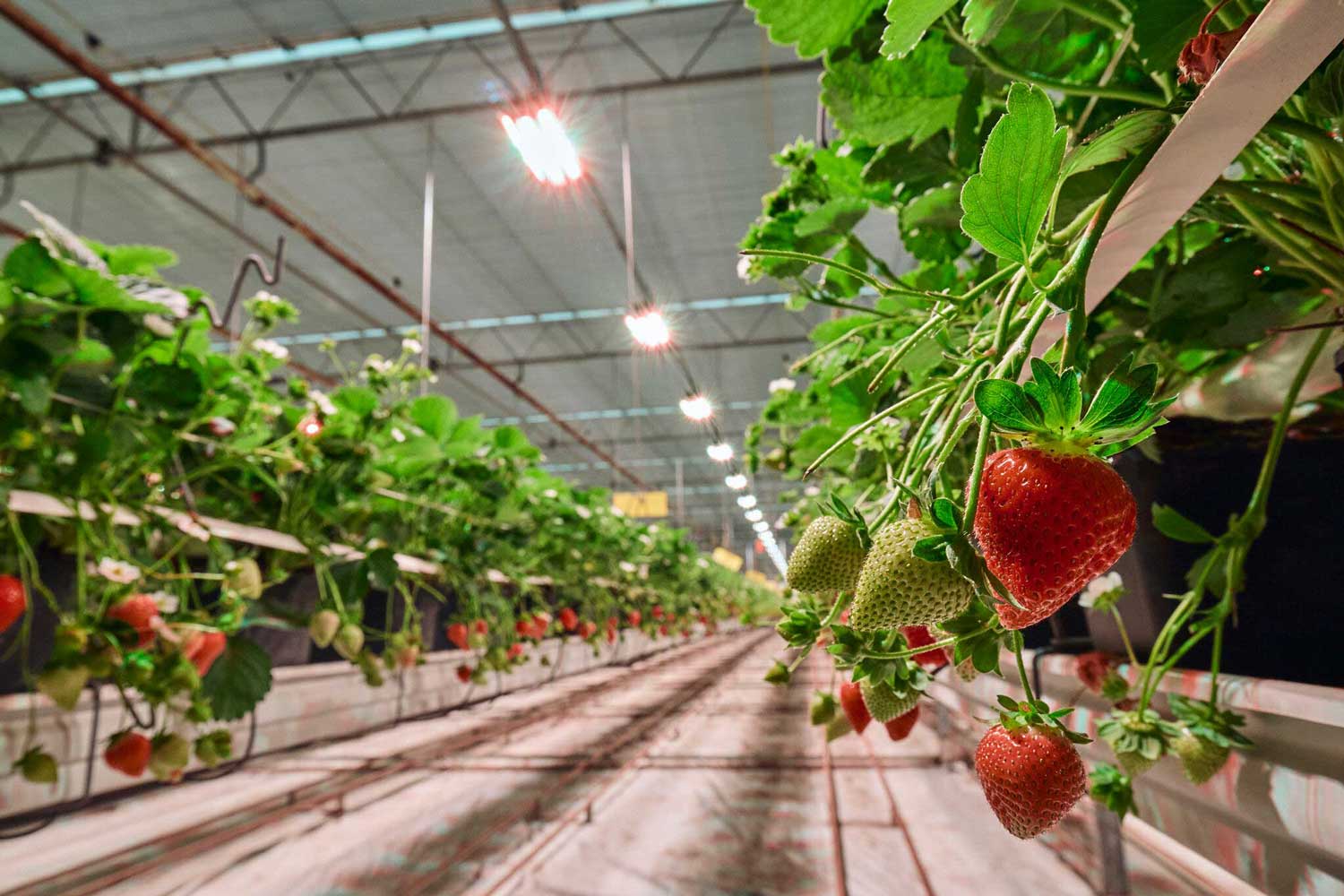
prevention is your only real weapon.
Through our visits to strawberry growers across southern France, we have witnessed first-hand how severely Pestalotiopsis is disrupting operations. Described as a major problem in many producing countries — China, Mexico, Spain, Italy — it gained significant ground in France as early as 2024 and continues to spread. What makes this fungus particularly dangerous is that it often establishes itself silently, long before the first visible symptoms alert the grower.
An opportunistic fungus with progressive, deceptive symptoms
Pestalotiopsis — whose full scientific name is Neopestalotiopsis clavispora — is an opportunistic fungus that preferentially establishes itself following plant stress or injury. It thrives in warm, humid conditions: precisely the environment found under protected structures during peak production periods.
The first symptoms appear on leaves as small brown-beige spots surrounded by a darker border. These spots gradually enlarge as the fungus sporulates, and black pycnidia can be observed on their surface.
What makes early detection so challenging is that the plant does not wilt immediately. Initially, symptoms remain foliar and discreet. They can easily be confused with phytotoxicity or other fungal crown infections such as Phytophthora cactorum. It is only after the full expression of aerial signs that the plant enters progressive decline — primarily around flowering and towards the end of the cycle.
What I have learned to recognise in the field is that Pestalotiopsis never manifests itself in a clear and immediate way. You first notice a plant that is slightly less vigorous than its neighbours, a few spots on a leaf — and you hesitate. Is it heat stress? Salt excess? This hesitation costs time, and with this fungus, time systematically works against the grower.
Mickael, Technical Advisor — Biogrow
Damage that spreads from leaf to fruit
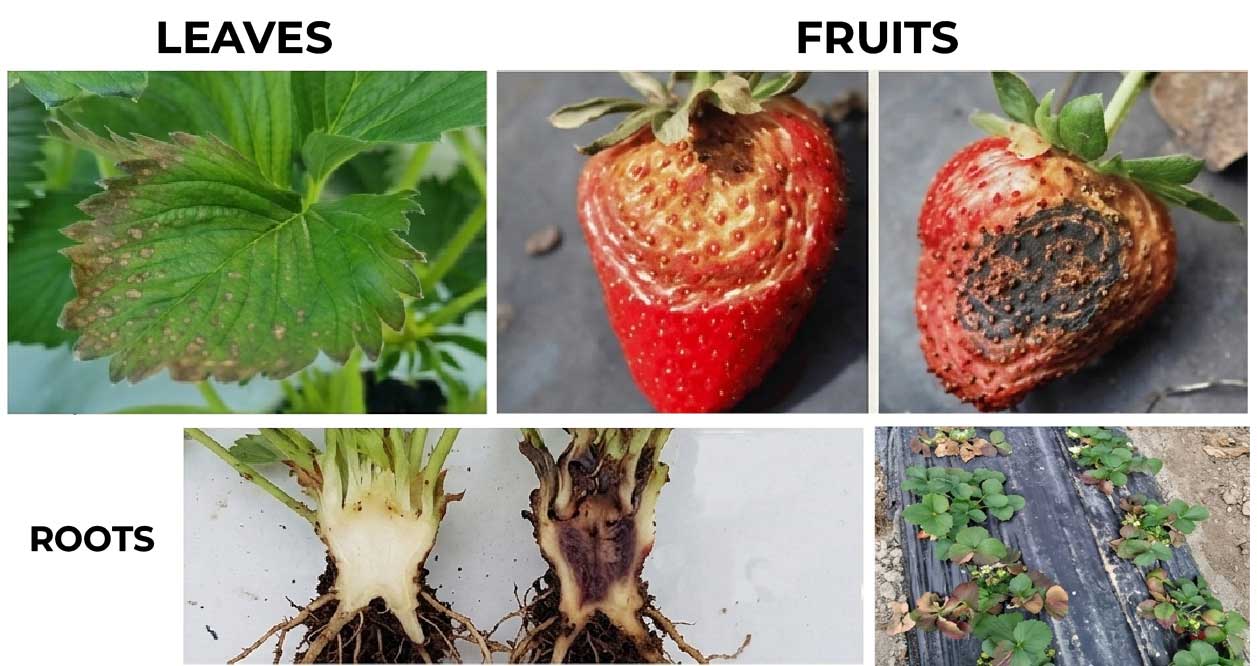
The fungus is not limited to foliage. It causes progressive weakening and rot of the root system — even though the roots often remain visually healthy during the first weeks, which further complicates diagnosis. Leaf browning intensifies around flowering, and dieback becomes widespread as harvest approaches.
The fruit itself is not spared. Fine brown spots of 2 to 4 mm appear first, then develop into large brown-black lesions with visible fungal fruiting bodies on the surface. Fruit eventually rots or mummifies, causing direct commercial losses on top of the loss of plants.
Ultimately, Pestalotiopsis is responsible for generalised plant decline affecting both field and substrate growing systems — no production method is exempt.
A fungus invisible at transplant reception
This is one of the most problematic aspects of this disease: at the time of receiving a contaminated young plant, it is impossible to identify the infection visually. Contamination is latent, and its development will be entirely determined by the climatic and agronomic conditions that follow transplanting.
Overcast, warm, and humid conditions under cover provide the ideal environment for the pathogen to express itself. Added to this are any hydric or nutritional stresses — excessively high electrical conductivity in particular — which weaken the plant and make it far more vulnerable to fungal colonisation.
Factors that promote Pestalotiopsis development
- High humidity under cover — prolonged warm and humid conditions, insufficient ventilation
- Hydric and saline stress — excessively high electrical conductivity in the nutrient solution
- Plant injuries — handling during crop management, mechanical damage
- Non-disinfected recycling — recirculated nutrient solutions without irrigation water treatment
- Unreplaced substrate — continued use of substrate previously exposed to contamination
Prevention: the only truly effective lever
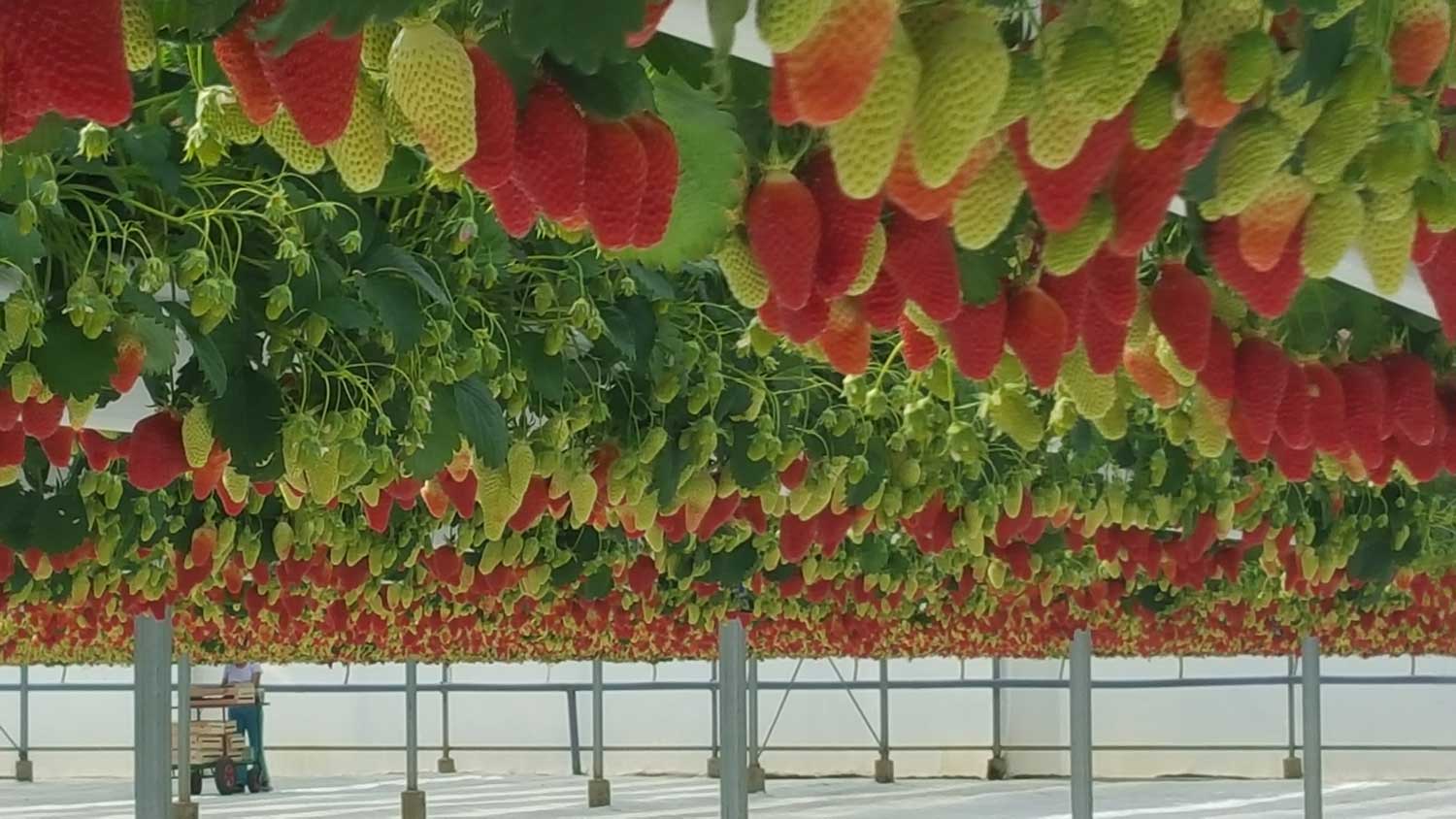
Against this fungus, prevention remains the only truly reliable weapon. The following prophylactic measures help create an environment unfavourable to its development and maintain vigorous plants — which is the first line of defence:
- Ensure maximum ventilation under cover to control humidity levels
- Maintain precise nutrition management and avoid any hydric or saline stress (controlled conductivity)
- Implement water disinfection if nutrient solution recycling is practised
- Inspect plants regularly, particularly around the flowering period
- Remove promptly any plant material showing suspicious symptoms
- Systematically renew substrates after any season that has experienced contamination
Good climate control, precise nutrition, unstressed plants — this is the best phytosanitary tool available against Pestalotiopsis.
When contamination is confirmed: what to do in practice?
Let us be direct on this point: to date, no curative method has demonstrated sufficient efficacy to control Pestalotiopsis once it is firmly established on a farm. There is no miracle solution.
That said, inaction is never the right response. From the first signs of suspicion, it is essential to act without delay. Applications — whether based on approved fungicides or biocontrol products — must be carried out in such a way that the product runs down over the entire plant and into its crown. These treatments will not eradicate the fungus, but they can help slow its progression and protect plants that are still unaffected.
Biocontrol products, particularly those based on Bacillus spp., are the subject of active research and show early promising results. Their actual efficacy under growing conditions, however, still needs to be documented more precisely — we will keep you informed as results develop.
Our field commitment against Pestalotiopsis
Pestalotiopsis confronts us with a reality the field imposes season after season: prevention is not a luxury, it is a necessity. A clean, renewed substrate with the right agronomic properties directly contributes to maintaining favourable root conditions for vigorous, resilient plants.
If you are observing suspicious symptoms on your farm, or if you would like to review your prevention protocols — ventilation, nutrition management, substrate renewal — our technical advisors are available to support you directly in the field.
The key to success remains the same season after season: prevention beats cure. A vigorous plant, grown in a healthy, renewed substrate, is always the best defence against fungal disease.