



Root Zone No. 1 · Strawberry
For many strawberry growers, the end of the season brings back the same question: what to do with the bags? Replant into them, compost them, recycle them, or start again with new ones? In this article, we look at what the trials measured for each option, why used coir loses yield, and how Regrow, our recycled coir substrate made in the UK, answers the problem.
What the trials show
In a NIAB trial (2022-2023), every alternative to virgin coir cost yield. Strawberry plants replanted directly into used coir yielded 10% less. Composted coir lost 16%. Even coir recycled on its own, with an industrial process still under development, lost 4%: on a whole crop, that is still a lot of fruit.
coir reused directly
composted coir
coir recycled on its own
Yield compared with virgin coir. NIAB trial, 2022-2023.
The type of crop matters too. In an earlier project run with growers, June-bearers were successfully replanted into used bags. Everbearers replanted year after year, on the other hand, suffered a significant yield loss.
Source: NIAB, Fruit Annual Review 2023, “Developing methods to recycle coir substrate”, p. 26
Recycling alone is not enough: the substrate also needs a fresh structure. That is why Regrow blends recycled coir with new coir, and why it gave similar yields in a commercial trial.
Why second-season coir loses performance
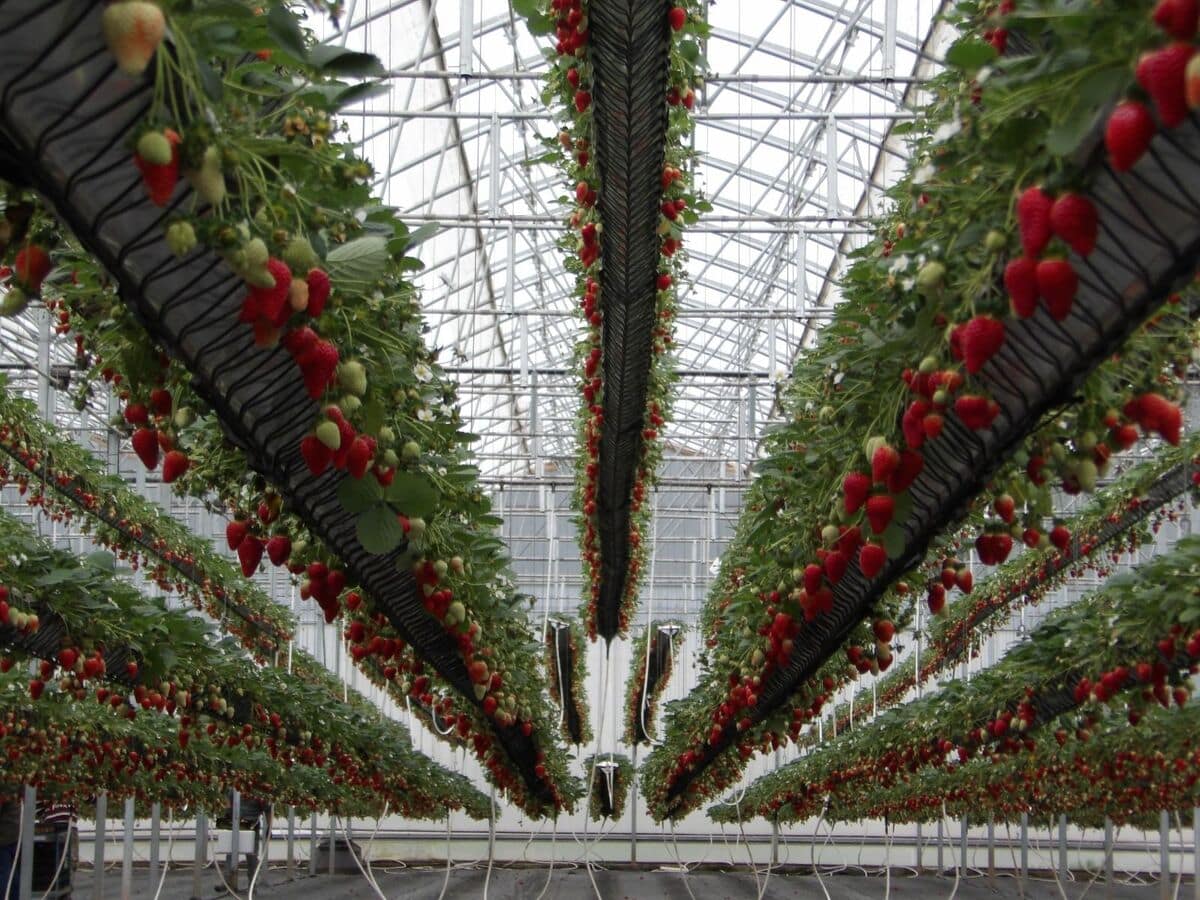
Used coir holds less air than virgin coir, and much more water. Commercial trials in Tasmania, published this year, point to the same cause: if second-year coir loses performance, it is mainly because the substrate breaks down physically, rather than because of a higher disease risk.
Over the season, fine particles move down and clog the pores in the lower part of the root zone. They create wetter areas there, short of oxygen. Hygiene matters too, but the trials show that most of the yield is lost through the structure.
Sources: NIAB, Fruit Annual Review 2023, “Developing methods to recycle coir substrate”, p. 26; Fruit Growers Tasmania / RMCG, “Coir reuse project findings” (2026)
Regrow: recycled coir with a fresh structure
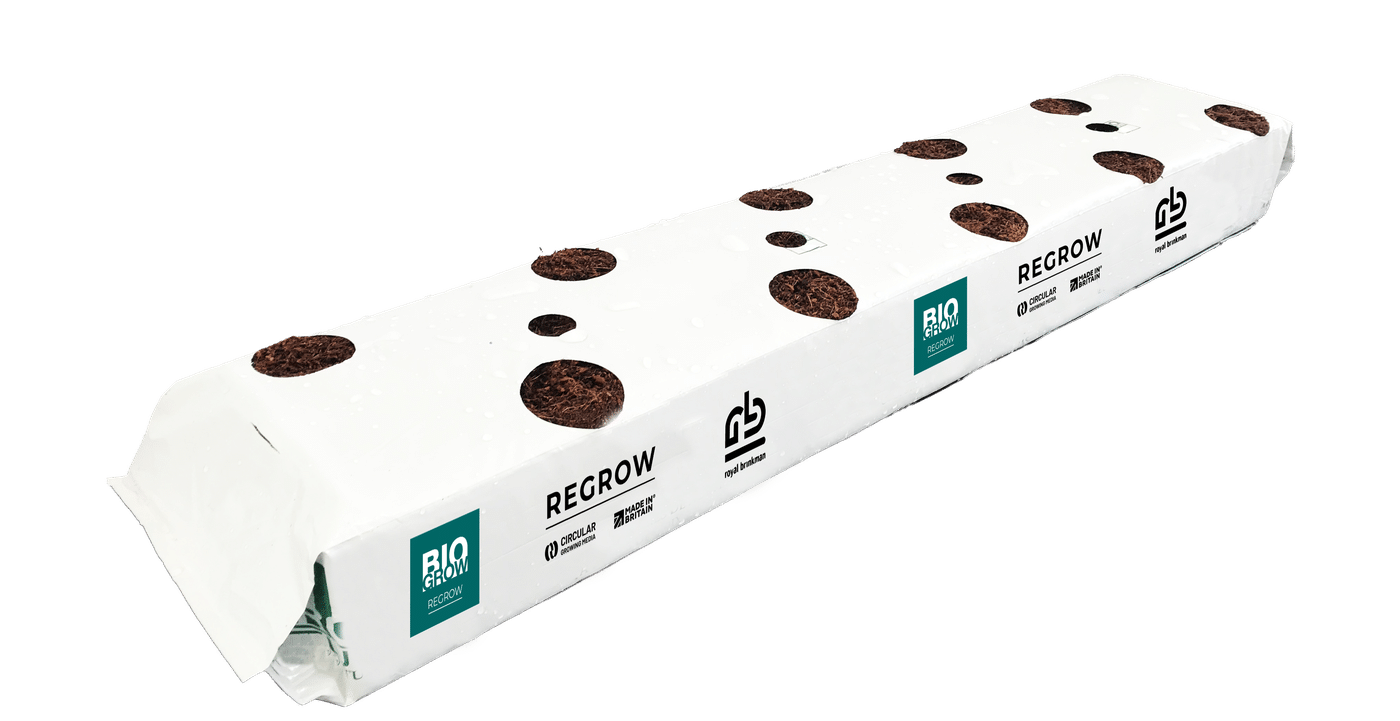
Recycled coir on its own still loses yield, because its structure is worn. Regrow does not stop at recycling: the used coir is sterilised, then blended with new coir, which brings back the structure the trials point to.
Regrow · Made in the UK
- CollectedUsed coir is collected from UK growers after the last harvest.
- SterilisedIt is heat-treated, which removes weeds and pathogens.
- RestructuredIt is blended with new, RPC-certified coir, which brings back a fresh structure.
- Back in productionIt goes back into glasshouses and tunnels as grow bags, big bags or bulk.
Available now for the 2027 season, with delivery across the UK and Ireland.
In a recent commercial trial on everbearers, shared with us by our recycling partner, the recycled coir used in Regrow gave a similar yield to virgin and reused coir combined, with an earlier harvest and less fertigation.
per plant, a similar yield
days earlier to harvest
fertigation over the season
Recent commercial trial on everbearers. The harvests in virgin and reused coir were recorded together, so the recycled coir is compared with the two combined.
Source: recent commercial trial on everbearers, results shared with BIOGROW by its recycling partner.
What the economics say
In the Tasmanian analysis, new coir in bags for a single season is still the option with the best gross margin, under current assumptions. Reuse options quickly become more attractive if the price of coir goes up.
Source: Fruit Growers Tasmania / RMCG, “Coir reuse project findings” (2026)
There is no single right answer for every farm. What decides it is the physical state of the substrate, and above all how much air is left at the bottom of the bag.
New bags, reuse or Regrow for 2027?
Tell us about your growing system: gutter type, varieties, irrigation strategy. We will look at the options with you, based on your own farm.